Problem
Can't remember where each record lives
DJ Crate solves it
Assign records to storage units and compartments, then find the right one from your phone while standing at the shelf.
Import from Discogs, find the right record by BPM and Camelot key, print QR labels, and build performance-ready crates.
CSV
collection.csv
BPM / KEY
118–126 · 5A–8A
SET
Friday / 22 records
DJ Crate solves it
Assign records to storage units and compartments, then find the right one from your phone while standing at the shelf.
DJ Crate solves it
DJ Crate analyzes tracks automatically and shows BPM and Camelot key; you can correct an uncertain value just for yourself.
DJ Crate solves it
A huge library makes it easy to return to the same familiar tracks. Pick the candidates and let Magic sequence a harmonic set by key, BPM, and style, revealing combinations that are easy to miss by hand.
Magic · future add-onDJ Crate solves it
Upload a Discogs CSV: matches reach your library in a minute, while every other row stays visible for review.
DJ Crate solves it
Build a sheet of QR labels with tracklists, BPM/key, and storage locations.
DJ Crate solves it
Get a Discogs-based valuation and export an inventory report.
Advanced featureOffer a listing owner 1–3 records from your library. They see clear cards with cover art, condition, and an estimate, while your notes and storage location remain private.
Three core screens connect the digital catalog to the physical collection.
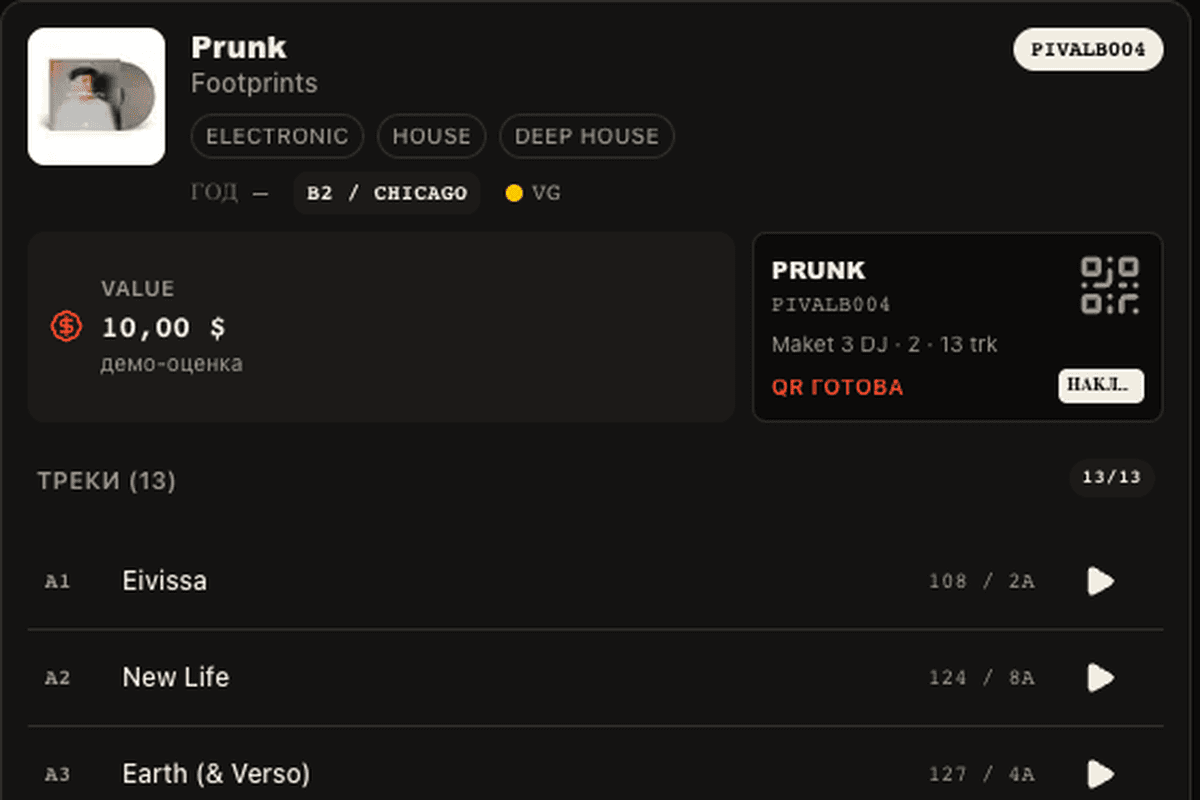
Tracklist, previews, and values for fast selection.
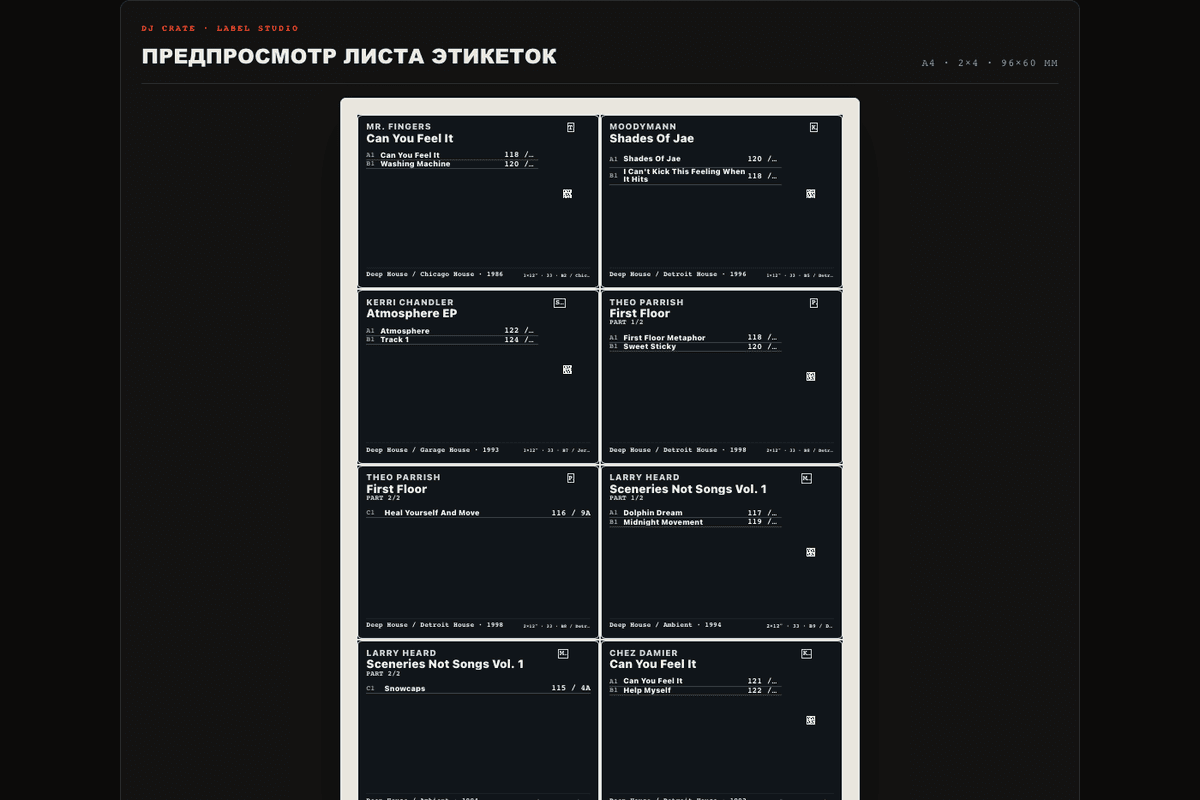
A printable grid with QR codes and record details.
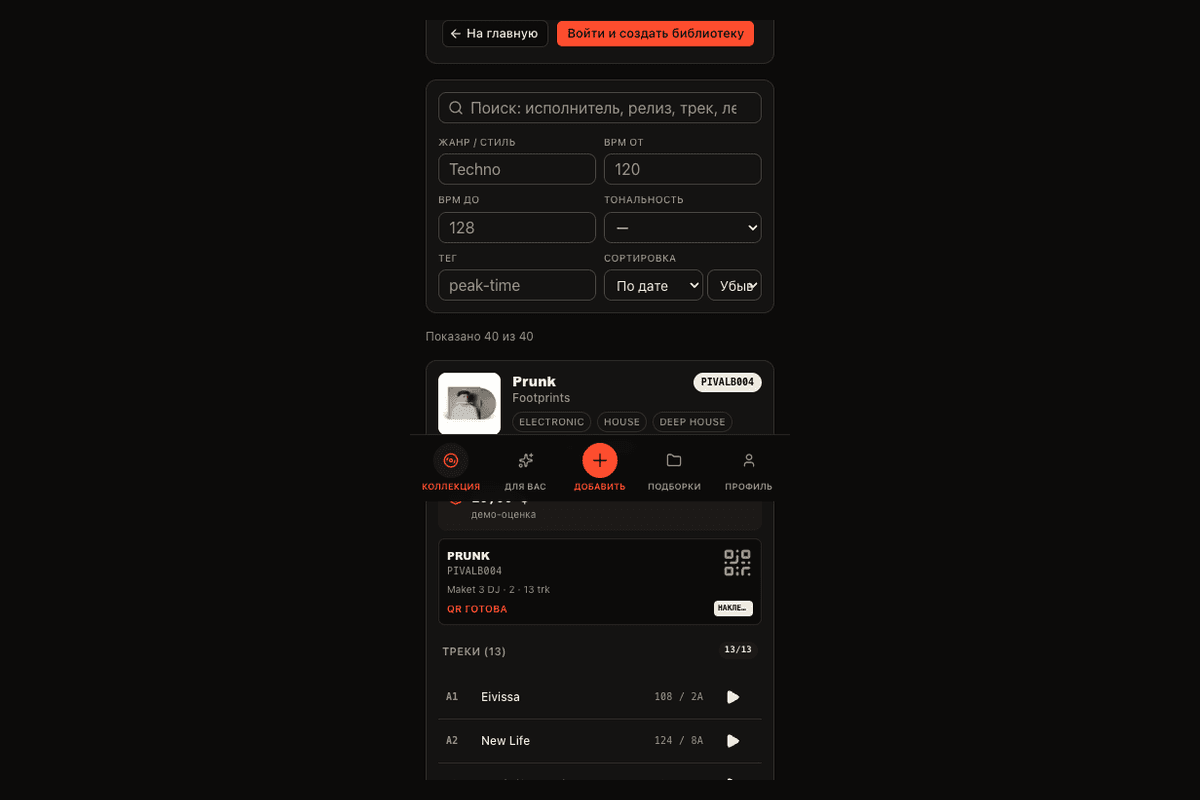
Check the collection at the shelf or a record fair.
Upload the collection export. Matches are added; every valid unmatched row becomes a visible draft.
Enrich the cards, print a sheet, and label the physical records.
Collect candidate tracks, set the BPM range and length, save the Magic sequence as a new crate, then move the records into a gig bag or box.
While testing is in progress, all ready DJ Crate capabilities are available to every user at no charge. Safety and anti-abuse controls continue to operate independently.
Upload a Discogs Collection CSV, or add releases one by one from the shared catalog, a Discogs link, or a fully manual card. Valid unmatched CSV rows stay visible as drafts.
Use “Find preview” on the release card. If no source is found, you can explicitly consent to attach an audio file up to 20 MB: the full file stays private and is deleted 20 days after a short shared excerpt is prepared successfully.
Treat them as practical hints, not absolute truth: short intros, live drums, and half- or double-time material can confuse analysis. Correct a value just for your own library without changing anyone else's data.
Choose releases, an A4 or Letter template, margins, and the starting sheet cell. The PDF includes card data and a QR passport for that copy; check print scale with page fitting disabled.
Copy condition, storage location, notes, rating, tags, crates, personal BPM/key, and uploaded source audio are owner-only. Short excerpts prepared with consent may become shared and do not expose private fields.
From a Garage listing you can ask a question, request a purchase, or offer 1–3 records from your own library in trade. The seller sees privacy-safe offer cards; Telegram contacts appear after acceptance. Payment and delivery stay directly between you, and the trust counter grows only when both participants confirm the deal — it cannot be inflated by one side.
DJ Crate is currently in free beta: all ready capabilities are open to every user at no charge.